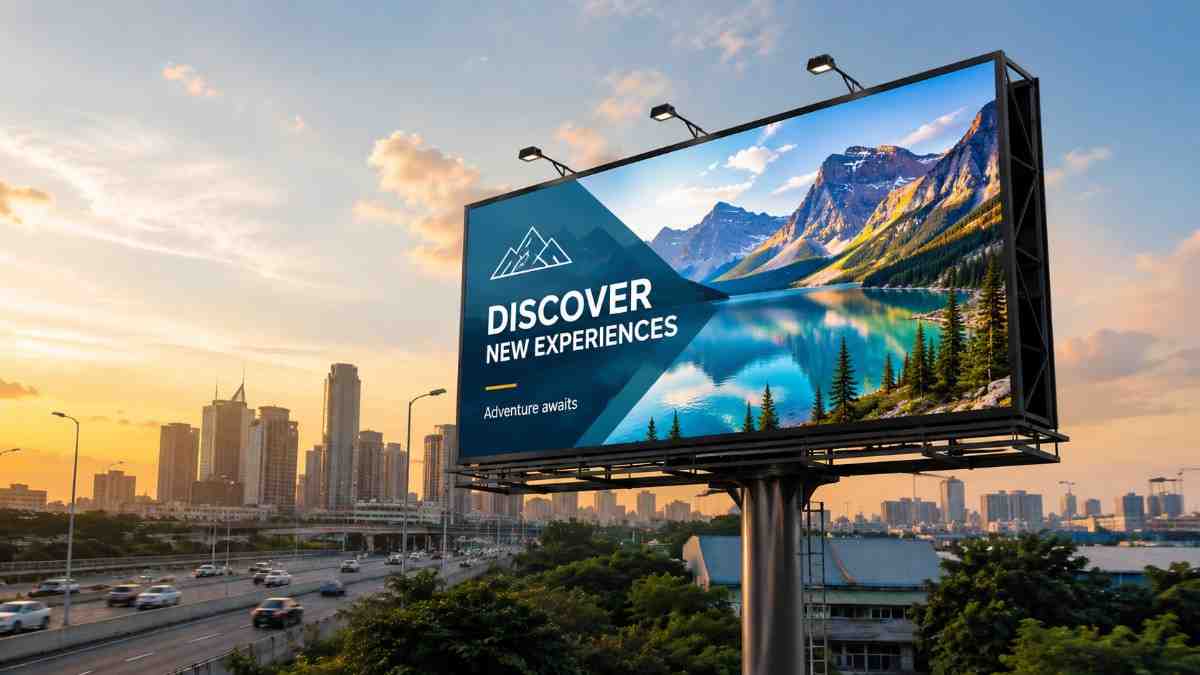
This guide breaks down everything you need to know about modern billboard advertising in New Zealand, whether you are a small business owner exploring outdoor advertising for the first time or a marketing manager looking to upgrade from traditional printed hoardings to digital display solutions.
The State of Billboards NZ Right Now
Billboard advertising in New Zealand has been around for over a century. But the format has changed more in the last decade than in the previous hundred years combined.
Printed billboards are not going away entirely. You still see them on motorway stretches and rural highways where digital infrastructure is limited. But in urban centres, shopping strips, and commercial precincts, digital billboard screens are rapidly replacing static formats because they offer something printed signs simply cannot: the ability to change.
Think about it from a basic business perspective. A printed billboard locks you into one message for the entire campaign period. A digital screen can run different content at 7am versus 7pm. It can display a weekend special on Friday afternoon and switch back to a brand awareness message by Monday morning. That flexibility alone transforms how businesses think about outdoor advertising.
According to a 2023 report by the Out of Home Advertising Association of Australia and New Zealand, digital out-of-home advertising grew by over 20 percent year on year, with urban digital formats driving the majority of that growth. The shift is real and it is accelerating.
Why Digital Billboards NZ Are Gaining Serious Ground
I've noticed that when business owners start looking at digital billboard options, the initial hesitation usually comes down to two things: complexity and cost. Both of those concerns tend to dissolve pretty quickly once they understand how accessible modern digital display technology has become.
The hardware has matured significantly. High-brightness LED screens designed for outdoor use are now weather-resistant, energy-efficient, and built to last through New Zealand's unpredictable climate. IP65-rated enclosures protect the internal components from rain, dust, and coastal salt air. Screens rated at 2500 nits and above remain clearly visible in direct sunlight, which is essential for any display that faces north or sits in an open outdoor environment.
Content management has also become dramatically simpler. Most modern digital billboard screens connect to a CMS platform that lets you update your messaging remotely from a laptop or mobile phone. No printing. No installation crew. No waiting.
Types of Billboards NZ Businesses Actually Use
Not every billboard solution suits every business. Understanding the main formats will help you figure out which one makes sense for your situation.
Large Format Digital LED Billboards
These are the big screens you see near motorway off-ramps, at sports venues, and along major arterial roads. They are typically owned and operated by outdoor advertising companies who sell time slots to advertisers.
For most small to medium businesses, buying time on a large format billboard is a viable option for brand awareness campaigns. The audience is broad and the impressions are high. The trade-off is that you have limited control over placement timing, neighbouring advertisers, and content formats.
Freestanding Portable Digital Screens
A more accessible format for most businesses. These are self-contained digital display units, typically 43 to 55 inches, mounted on a wheeled or fixed stand that can be positioned at your premises or at an event.
In my experience, these work exceptionally well for street-level retail businesses, hospitality venues, and event operators. A portable digital screen positioned at a busy footpath with a strong promotional message can pull people in who would have otherwise walked straight past.
Dynamic Displays supplies a second-generation 43-inch outdoor portable screen with a 2500-nit panel, IP65 weatherproofing, a built-in 10-hour battery, and GPS anti-theft. That kind of unit is effectively a portable billboard that belongs entirely to your business.
Wall-Mounted and Fixed Outdoor Digital Displays
For businesses with a permanent location and consistent foot or vehicle traffic, a wall-mounted outdoor screen is often the most practical long-term investment. These are secured to the building facade or a purpose-built structure, connected to mains power, and managed remotely through a CMS.
Petrol stations, pharmacies, fast food outlets, and building directories are obvious examples. But I've also seen them used effectively by medical clinics, gyms, and real estate agencies. Any business with a consistent public-facing location can benefit from a permanently mounted outdoor screen.
What Makes a Billboard Actually Work
Having a screen is just the start. The content you put on it determines whether anyone stops, slows down, or walks through your door. Here is what consistently works for outdoor display content.
Keep the message to a single idea. Passersby have about three seconds to absorb what is on your screen. If you are trying to communicate three things, you will communicate nothing. Pick one message per slide and make it count.
Use contrast and large typography. Text that looks perfectly readable on a desktop monitor can disappear entirely on a bright outdoor screen at a distance of 10 metres. Bold fonts, high contrast colour combinations, and a large point size are non-negotiable.
Motion attracts attention. Even a subtle animation or a short looping video clip will outperform a static image on a digital screen. The human eye is hardwired to notice movement. Use it.
Match content to context. A lunchtime special should be running around 11am, not at 8pm. A weekend promotion should be live from Thursday. Time-sensitive content is one of the biggest advantages digital screens have over printed billboards, so use that scheduling capability.
Update regularly. When I tried running the same content on a client's screen for six weeks without any changes, foot traffic response dropped noticeably by week three. People who pass your screen daily tune it out if it never changes. Refresh your content at least weekly.
Choosing Between Traditional and Digital Billboards NZ Options
This is a question that comes up constantly. When does a digital screen make more sense than a printed billboard, and vice versa?
Here is a practical way to think through it:
- If your message changes frequently (weekly specials, seasonal promotions, event-based advertising), a digital screen will save you significant printing and installation costs over time.
- If you need location flexibility (markets, events, roadshows), a portable digital screen gives you something a fixed printed billboard cannot.
- If your goal is broad reach along a specific road or highway with a single brand message for months at a time, a traditional printed billboard can still deliver reach at scale.
- If you want full control over your content, your own digital screen is the only option that gives you that without ongoing third-party fees.
- If you are advertising in an urban retail environment where multiple messages need to coexist, digital is almost always the smarter choice.
For most New Zealand businesses with a physical presence, owning a digital outdoor screen makes more long-term sense than renting billboard space from a third party. You build equity in the hardware, you control the content, and you can use it as long as you need.
Billboards NZ: Industry Applications Worth Knowing
The range of businesses benefiting from digital outdoor displays in New Zealand is wider than most people initially assume.
Retail stores and shopping centres use outdoor digital screens to drive impulse decisions from people already nearby. A screen outside a clothing store promoting an end-of-season sale does exactly the same job as a large hoarding but at a fraction of the scale and setup cost.
Hospitality venues display menus, daily specials, happy hour times, and upcoming events. This is particularly effective in competitive dining strips where every business is fighting for the same foot traffic.
Event organisers and exhibition companies rely on portable digital screens for wayfinding, branding, sponsor messaging, and live event schedules. A portable billboard that runs for a full day on battery power and can be repositioned in minutes is a serious operational asset.
Real estate agencies display new listings, open home schedules, and agent profiles on street-facing outdoor screens. When I tried applying this approach to a Wellington suburban agency, the response rate on the listed properties was noticeably higher than from printed window displays alone.
Corporate buildings and campuses use outdoor screens for visitor information, directory displays, and security announcements. It modernises the building's appearance and reduces the administrative burden of keeping printed signage updated.
Dynamic Displays works across all of these sectors, helping New Zealand businesses find the right outdoor display format for their specific environment and communication goals.
What to Ask Before You Buy an Outdoor Billboard Screen
Before committing to any outdoor digital display purchase, run through these questions with your supplier.
- What is the IP rating? Anything below IP65 is a risk in NZ outdoor conditions.
- What is the screen brightness in nits? Minimum 2500 for direct sunlight locations.
- What OS does it run and what CMS is included? Make sure content management is straightforward and does not lock you into expensive ongoing software fees.
- Is local support available in New Zealand? Overseas-only support can leave you waiting weeks for a resolution if something goes wrong.
- What warranty is provided and does it cover outdoor use? Some warranties exclude outdoor deployment, so read the fine print carefully.
- Is installation included or available? For permanent mounting, you want a supplier who can manage or coordinate the full installation.