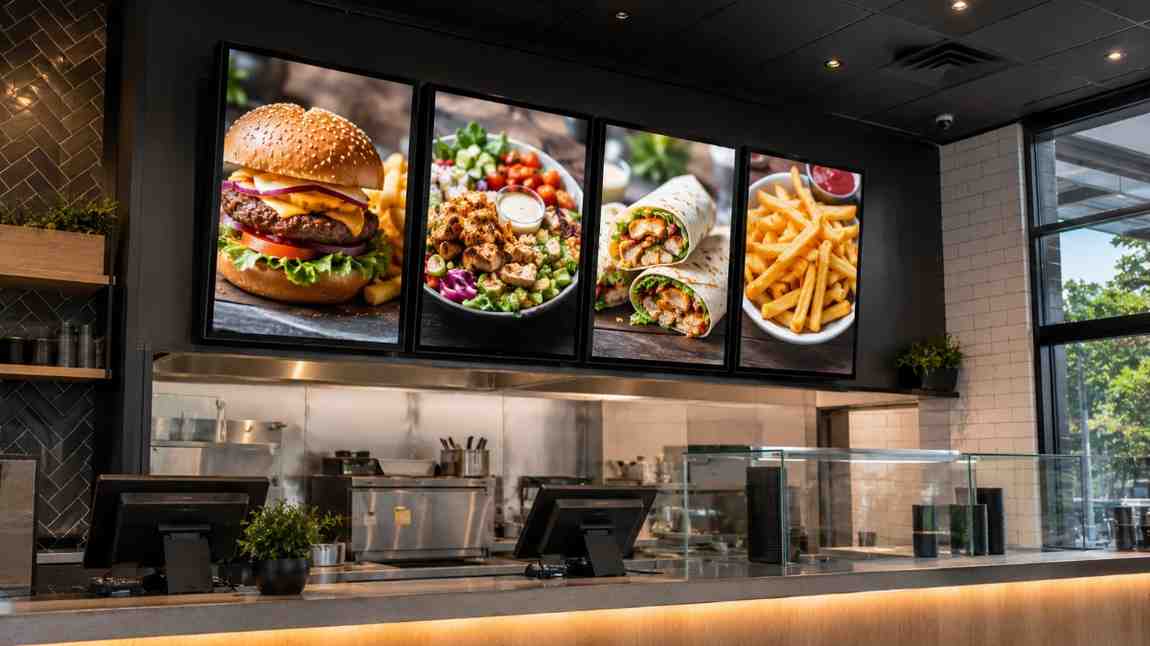
Whether you run a busy Auckland cafe, a takeaway shop in Wellington, or a multi-location restaurant chain, switching to digital menu boards is one of the most practical upgrades you can make. This guide covers everything you need to know, from how they work to what makes a genuinely good installation, so you can make a confident decision without the guesswork.
Why Digital Menu Boards Are Changing the Hospitality Industry
The shift away from printed menus and static chalkboards has been building for years, but the pace of adoption across New Zealand has accelerated significantly. Hospitality operators who have made the switch are not going back. The operational benefits alone justify the change, and the impact on customer experience goes well beyond convenience.
A study by Cornell University's Centre for Hospitality Research found that digital menu boards increase average transaction values by up to 3 to 5 percent through better promotion of high-margin items and upsell opportunities. That is not a small increment for a business running hundreds of transactions per day.
I have noticed that the biggest immediate win for most businesses after switching is not actually the sales uplift. It is the time saved. Updating a printed menu across a multi-location business can take days. Updating a digital menu board network takes minutes from a single dashboard, regardless of how many locations are involved.
How Digital Menu Boards Actually Work
Understanding the basic components helps you evaluate options intelligently and avoid being oversold on features you do not need or undersold on specifications that matter.
The Display Screen
The screen itself is the most visible part of the system. For hospitality use, commercial-grade LCD or LED screens are the correct choice. These are built for continuous operation in environments where temperature, humidity, and operating hours exceed what consumer televisions are designed to handle.
Screen size depends on viewing distance and ceiling height. A screen behind a counter viewed from one metre requires different sizing to a display mounted high on a wall serving customers queuing from three to four metres away. Getting this calibration right matters significantly for readability.
The Media Player
The media player is the device that drives the content on your screen. It connects to your display and pulls in content either from a local storage source or from a cloud-based content management system. Some commercial screens have the media player integrated, which simplifies installation and reduces potential failure points.
The Content Management System
This is the brain of your digital menu board setup. A good cloud-based content management system lets you update your menu from any device with an internet connection, schedule different menus for breakfast, lunch, and dinner automatically, and push changes instantly across every screen in your network.
When I tried an older USB-based content update system on behalf of a client, the workflow was frustrating. Every change required creating a new file, saving it to a USB drive, walking to each screen, and manually updating it. Moving to a cloud-based system transformed that process into a two-minute task from a laptop.
Types of Digital Menu Boards for Different Hospitality Environments
The right type depends on your specific environment, your customer flow, and how your space is laid out.
Single Screen Menu Boards
The most accessible entry point. A single well-placed commercial screen behind or above your service counter handles the core job of displaying your menu clearly and professionally. It is the right starting point for small cafes, independent takeaways, and food stalls.
Do not underestimate what a single quality screen can do. A properly sized, well-lit display with clean design communicates professionalism and clarity in a way that a handwritten chalkboard or a laminated printed menu simply cannot match.
Multi-Screen Menu Board Arrays
Larger quick service restaurants, food courts, and venues with wide service counters typically use multiple screens arranged side by side. Each screen can display a different section of the menu, or all screens can show the same content rotating through different categories.
Multi-screen configurations give you more visual real estate and allow customers to take in your full menu without crowding around a single small screen. They also allow you to dedicate specific screens to promotional content, combo deals, or seasonal specials without interrupting the flow of the main menu.
Outdoor Digital Menu Boards
Drive-throughs and outdoor service windows need displays engineered specifically for the outdoors. This means IP65 or higher weather protection, high brightness ratings of 2500 nits minimum, and thermal management systems that handle both summer heat and winter cold.
Dynamic Displays has supplied and installed outdoor digital menu board solutions for hospitality operators across New Zealand, with particular attention to the weather resilience requirements that the NZ climate demands. Outdoor hardware that is not genuinely weatherproofed fails quickly and costs significantly more to replace than it saved upfront.
Portrait and Landscape Orientation Options
Most digital menu boards are installed in landscape orientation, matching the natural wide format of a menu layout. However, portrait orientation is increasingly common in environments with high ceilings, narrow wall sections, or specific design aesthetics.
Some businesses use a combination of both, with landscape screens for the main menu and portrait screens for promotional content displayed at eye level near the queue or point of purchase.
What Makes a Digital Menu Board Design Actually Work
Hardware is only part of the equation. The content running on your screens determines whether digital menu boards genuinely improve your customer experience or just replace one ineffective format with another.
Here is what separates high-performing digital menu board content from content that just sits there:
- High-quality food photography that makes items look genuinely appealing, not stock images that look generic
- Clear hierarchy with categories, items, and descriptions laid out in a logical reading order
- Consistent brand colours and fonts that align with the rest of your venue's visual identity
- Strategic placement of high-margin items in prime screen positions where the eye naturally lands first
- Motion used sparingly because subtle animation can draw attention to featured items without making the overall display feel chaotic
- Readable font sizes at the actual viewing distances your customers will experience, not just what looks good on a laptop screen
In my experience, businesses that invest in properly designed menu content see substantially better results than those who put their existing printed menu layout onto a digital screen and call it done. The two formats are different, and good digital menu design accounts for that.
Key Benefits of Switching to Digital Menu Boards
Let us be specific about what you actually gain.
Instant content updates. A sold-out item can be removed from your menu in seconds. A new special can go live immediately. No waiting for a printer, no crossed-out items, no embarrassed staff explaining to customers that something is not available.
Scheduled menu automation. Your breakfast menu can automatically transition to your lunch menu at 11am without anyone touching a screen. Your happy hour promotions can appear at exactly the right time and disappear when the promotion ends. This kind of automation reduces staff workload and eliminates the risk of human error in menu presentation.
Better upselling opportunities. Digital menu boards allow you to feature combo deals, add-on suggestions, and premium options in ways that printed menus handle awkwardly. A well-placed animated prompt for an upsell item consistently outperforms static text in driving additional purchases.
Reduced long-term operational costs. The ongoing cost of reprinting menus, updating printed boards, and managing printed promotional materials adds up significantly over time. Digital menu boards eliminate most of those costs after the initial installation.
Professional brand presentation. A venue with clean, well-designed digital menu boards looks more established and more trustworthy than one with faded printed menus or hand-drawn specials boards. That first impression matters for customer confidence and willingness to spend.
How to Choose the Right Digital Menu Board System for Your Business
This decision is worth taking time over. The wrong choice creates operational headaches and additional expense. The right choice delivers genuine long-term value.
Start by answering these questions honestly:
- How many screens do you need and where will they be positioned?
- Will any screens be used in outdoor or semi-outdoor environments?
- How frequently will you need to update your menu content?
- Who in your team will be responsible for managing content day-to-day?
- Do you need scheduling capability for different dayparts?
- Are you managing a single location or multiple sites?
The answers to these questions shape every subsequent decision about screen size, brightness specifications, content management platform choice, and installation requirements.
A good signage provider will ask you all of these questions before recommending anything. If a provider tries to sell you hardware without understanding your operational context, that is a clear signal to look elsewhere.
Dynamic Displays approaches every hospitality project with this kind of needs-first methodology, which is a significant part of why their installations consistently deliver on expectations rather than creating post-installation frustration.
Installation and Ongoing Support: What to Expect
A quality digital menu board installation involves more than mounting a screen on a wall. Professional installation covers cable management, secure mounting appropriate for the screen weight and wall type, media player configuration, content management system setup, and handover training so your team can manage content confidently from day one.
Ongoing support matters too. Commercial screens occasionally need attention, software updates need to be managed, and content management questions come up as your team starts using the system more creatively. Having a local provider who can respond quickly and knowledgeably makes a real difference to how smoothly your system operates over its full lifespan.
Digital menu boards are not a luxury for large chains. They are a practical operational tool that hospitality businesses of all sizes across New Zealand are adopting because the benefits are clear and the technology has become genuinely accessible.
If you are ready to move away from printed menus and explore what digital menu boards can do for your venue, the team at Dynamic Displays offers site assessments and tailored recommendations for hospitality businesses throughout New Zealand.