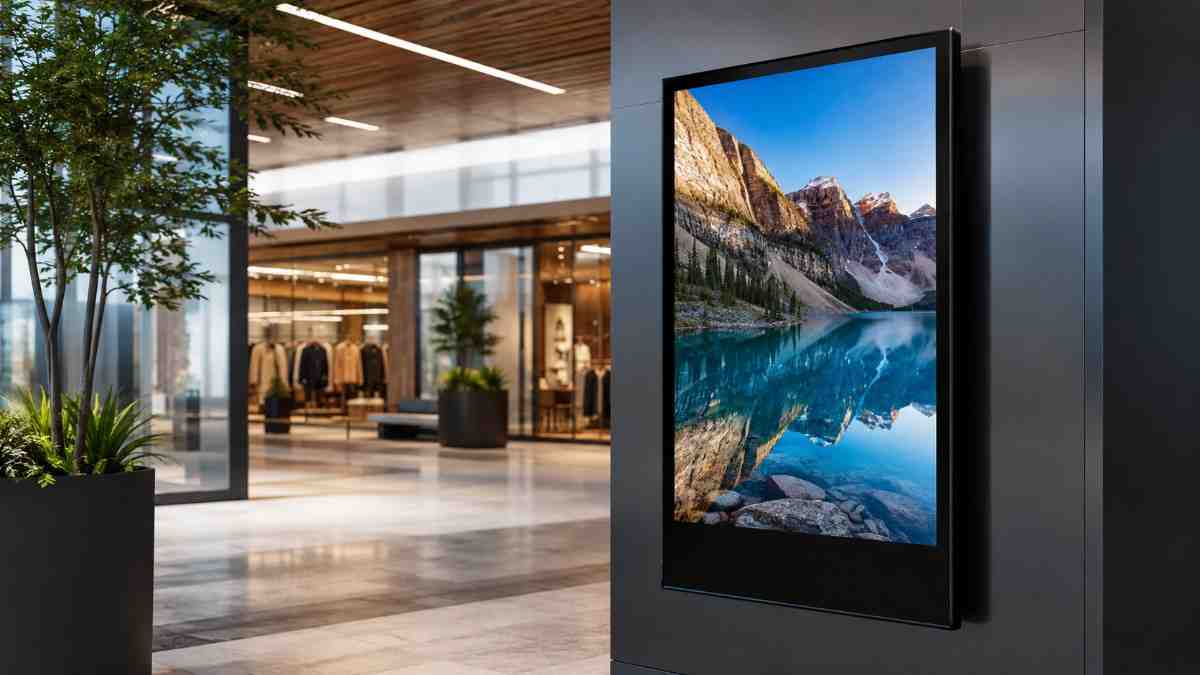
This guide breaks down everything you need to know about digital signage, from how it works to why it works, and how to pick the right solution for your space.
What Are Digital Signage Display Screens?
At their core, digital signage display screens are electronic screens used to show dynamic content including images, videos, animations, menus, announcements, and real-time data. Unlike a printed sign that stays the same until someone physically changes it, a digital screen can be updated instantly, remotely, and as often as you need.
They come in all shapes and sizes. You might have seen them as large outdoor LED billboards, sleek wall-mounted LCD panels inside a shopping mall, or compact menu boards behind a café counter. The technology behind them has matured a lot over the past decade, and what was once expensive and complicated is now genuinely accessible for businesses of all sizes.
In my experience, the biggest misconception people have is that digital signage is only for big brands or enterprise-level budgets. That is simply not true anymore.
Why Digital Signage Works So Well
There is a reason brands invest in screens rather than print. The human brain processes visual information 60,000 times faster than text. A study by Nielsen found that digital out-of-home advertising generates higher recall rates compared to static formats, with viewers 47% more likely to remember a digital ad than a printed one.
Beyond the neuroscience, there is something deeply practical about it too.
I have noticed that businesses using digital screens at their point of sale report a measurable lift in customer engagement. The content moves. It changes. It catches the eye in a way a laminated flyer simply cannot.
When you can update your messaging in minutes, react to stock changes, seasonal promotions, or even the weather, you stop broadcasting and start communicating.
Types of Digital Signage Display Screens
Not all screens are created equal. Choosing the right type depends on your environment, your goals, and who you are talking to.
Indoor Digital Signage
Indoor screens are designed for controlled lighting environments. They typically use LCD or LED-backlit panels and are optimised for close to medium viewing distances. You will find these in:
- Retail stores showcasing product promotions
- Corporate lobbies displaying company news and wayfinding
- Restaurants and cafés running digital menu boards
- Healthcare waiting areas sharing patient information
The quality on these screens is impressive. Crisp resolution, vibrant colours, and slim bezels that look great against any wall or mounting setup.
Outdoor Digital Signage
Outdoor screens are a different beast entirely. They need to handle sunlight, rain, dust, and temperature changes without missing a beat. High-brightness panels are essential here, typically rated at 2500 nits or above, so the content stays visible even in direct afternoon sun.
When I tried installing a standard indoor screen outdoors for a small event once, the screen was completely washed out by midday. It was an expensive lesson in why weatherproofing and brightness ratings matter.
Outdoor digital signage is ideal for forecourt advertising, event branding, transport hubs, and street-facing retail windows.
Double-Sided Digital Signage
One of the smartest uses of screen real estate is the double-sided digital display. Instead of committing one face of a screen to a single audience, you get two active surfaces. Showrooms, malls, and high-footfall corridors benefit enormously from these. Pedestrians walking in either direction get hit with your message.
The team at Dynamic Displays has built a strong reputation in New Zealand for deploying exactly these kinds of solutions, particularly in retail and corporate environments where visibility from multiple angles matters.
Digital Menu Boards
If you run a food business, you already know the pain of reprinting menus every time something changes. Digital menu boards eliminate that entirely. You update the screen from your phone or laptop, the menu changes instantly, and your team can focus on serving customers rather than swapping out printed boards.
They are not just functional either. A well-designed menu board with motion graphics and high-quality food photography genuinely makes food look more appealing. That translates directly to higher average order values.
Key Benefits of Digital Signage for Your Business
Let us get specific about what you actually gain when you switch to digital.
1. Real-Time Content Updates Change your messaging instantly without printing costs or downtime. Flash a lunch special at 11am. Promote an evening event by 4pm. It takes minutes.
2. Stronger Brand Presence Consistent, high-quality visuals reinforce your brand identity. Customers walking past a professional digital display perceive your business as modern, credible, and on top of things.
3. Reduced Long-Term Costs The upfront investment replaces ongoing printing, design, and installation costs that add up faster than most business owners realise.
4. Flexibility Across Locations If you have multiple branches, you can manage content across every screen from a single dashboard. One update, pushed everywhere.
5. Higher Customer Engagement Motion and animation naturally draw the eye. A static sign is easy to walk past. A screen playing a well-crafted 15-second loop is not.
6. Environmental Impact Less paper waste. Fewer printing chemicals. For businesses working toward sustainability goals, this is a genuinely meaningful benefit.
Choosing the Right Digital Signage Display Screen
This is where a lot of businesses get stuck. The options can feel overwhelming. Here is a practical framework to simplify the decision.
Define Your Environment First
Is the screen going indoors or outdoors? Near a window with harsh afternoon glare? In a dimly lit corridor or a brightly lit showroom? Brightness and ambient light are your first filters.
Consider Screen Size and Viewing Distance
A general rule: for every metre of viewing distance, you want roughly 10mm of screen height. A screen being viewed from 4 metres away should ideally be at least 40 inches. For large open spaces, go bigger. For counter-top menus, a smaller format works fine.
Think About Content Management
Who will be updating the content? How often? Do you need scheduled playlists, live data feeds, or multi-zone layouts? Picking a screen with a built-in media player and intuitive software saves a lot of headaches down the track.
Get the Installation Right
A beautiful screen poorly mounted looks amateur. Think about cable management, structural mounting, power access, and ventilation. In my experience, businesses that cut corners on installation end up calling for help six months later.
This is one area where working with a specialist pays off. Dynamic Displays, for example, handles end-to-end installation including hardware selection, mounting, and content system setup, which means you are not left piecing it together yourself.
Common Mistakes to Avoid
Even with the best hardware, digital signage can fall flat if the execution is off. Watch out for these:
- Overcrowding the screen with text. Screens are not billboards for paragraphs. Keep messaging short, punchy, and visual.
- Using low-resolution images. Pixelated content on a high-res screen looks worse than no content at all.
- Ignoring screen brightness for the location. As mentioned, this one matters more than most people realise.
- Forgetting to update content regularly. A screen running the same loop for six months stops being noticed. Fresh content keeps it working.
- Skipping professional installation. Screens that overheat, tilt, or have visible cable runs undermine the whole investment.
Industries Getting the Most From Digital Signage
Digital signage is not sector-specific. But certain industries have taken to it particularly well.
Retail uses screens to push promotions, highlight new arrivals, and reduce perceived wait times at checkouts.
Hospitality and Food Service relies on digital menu boards to improve order accuracy, upsell items, and manage multiple daypart menus without staff involvement.
Corporate Offices deploy screens for wayfinding, meeting room bookings, internal communications, and visitor management.
Healthcare uses waiting room displays to share health information, reduce anxiety, and manage patient flow more effectively.
Events and Exhibitions depend on portable, high-impact screens to create standout booths and immersive brand experiences. Dynamic Displays has worked extensively in this space across New Zealand, helping event companies create visuals that genuinely stop foot traffic.
Final Thoughts
Digital signage display screens have moved from a nice-to-have novelty to a genuine business tool that pays for itself when used well. Whether you are running a single café or managing a national retail chain, there is a screen solution that fits your context, your space, and your goals.
The key is not just buying a screen. It is understanding your environment, matching the right hardware to the job, keeping content fresh, and working with people who know what they are doing.
If you are based in New Zealand and want to explore what the right digital signage setup looks like for your business, Dynamic Displays offers tailored solutions backed by real installation experience. Worth a conversation.