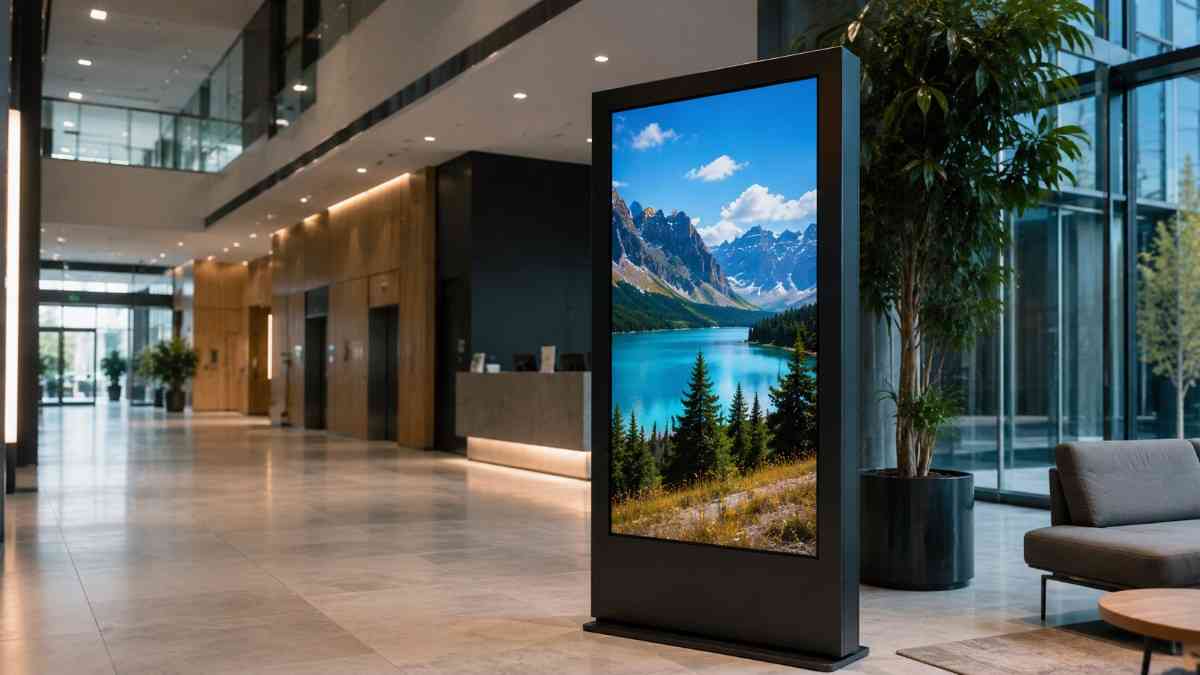
From retail stores and corporate offices to schools, healthcare facilities, hospitality venues, and public spaces, digital signage helps businesses share dynamic content in a way that feels modern, engaging, and easy to manage.
At Dynamic Displays, businesses across New Zealand are embracing digital display solutions to improve visibility, strengthen communication, and create more memorable customer experiences.
What Is Digital Signage NZ Businesses Are Using?
Digital signage refers to electronic display systems used to present information, advertisements, announcements, promotions, videos, and other visual content.
Unlike traditional printed signage, digital displays can be updated instantly and managed remotely.
Common digital signage applications include:
- Promotional displays
- Menu boards
- Wayfinding systems
- Information screens
- Advertising displays
- Reception displays
- Internal communications
- Event announcements
The flexibility of digital signage allows organisations to communicate more effectively while adapting content whenever needed.
Why Digital Signage Has Become So Popular
Walk through a shopping centre, airport, university campus, or modern office building and you'll likely see digital displays everywhere.
There's a simple reason for this.
Digital content attracts attention more effectively than static information.
According to a report by Digital Signage Federation, dynamic visual content can significantly improve audience engagement and message retention compared to traditional signage formats.
I've noticed that people naturally look toward moving visuals and changing content. This makes digital signage particularly valuable when businesses need to communicate important information quickly.
Benefits of Digital Signage NZ Organisations Value
Instant Content Updates
One of the biggest advantages of digital signage is flexibility.
Content can be updated in real time without replacing physical materials.
This allows businesses to:
- Promote new products
- Share announcements
- Display event information
- Update schedules
- Communicate emergency messages
Updates can often be managed from a central location.
Improved Audience Engagement
Digital displays combine visuals, motion, video, and messaging to create more engaging experiences.
When I tried comparing customer attention toward static posters and digital displays, the difference was noticeable. People consistently spent more time viewing dynamic content.
Stronger Brand Presence
Digital signage helps businesses maintain consistent branding across multiple locations.
Colours, logos, messaging, and visual styles can be managed centrally to ensure uniform presentation.
Enhanced Communication
Clear communication improves customer experiences and operational efficiency.
Digital signage allows organisations to deliver timely, relevant information exactly where it is needed.
Reduced Dependence on Printed Materials
Many organisations use digital displays to minimise the need for frequent printing and manual updates.
This creates greater flexibility while simplifying content management.
Types of Digital Signage Solutions
Digital signage is not a one-size-fits-all technology.
Different environments require different display solutions.
Indoor Digital Signage
Indoor displays are commonly used in:
- Retail stores
- Reception areas
- Corporate offices
- Educational facilities
- Healthcare centres
These displays support promotions, announcements, and informational content.
Outdoor Digital Signage
Outdoor digital displays are designed to remain visible in varying environmental conditions.
Common uses include:
- Advertising displays
- Public information systems
- Transportation hubs
- Event venues
- Commercial properties
Interactive Digital Signage
Interactive displays allow users to engage directly with content.
Applications include:
- Self-service kiosks
- Wayfinding systems
- Product catalogues
- Visitor information centres
Interactive technology can improve convenience while enhancing user experiences.
Video Walls
Video walls combine multiple screens to create large-format visual displays.
These systems are often used in:
- Control rooms
- Retail environments
- Event spaces
- Corporate facilities
Their scale creates impressive visual impact.
Industries Benefiting from Digital Signage NZ Solutions
Retail
Retail businesses use digital signage to promote products, advertise campaigns, and improve in-store experiences.
Hospitality
Hotels, cafés, restaurants, and entertainment venues use digital displays for menus, promotions, and guest communication.
Education
Schools and universities use digital signage to communicate schedules, announcements, and event information.
Healthcare
Healthcare facilities use displays for patient communication, wayfinding, and informational messaging.
Corporate Offices
Businesses use digital signage for internal communication, visitor information, meeting schedules, and company announcements.
Government and Public Spaces
Public sector organisations use digital displays to share important information and improve public communication.
What Makes Digital Signage Effective?
Technology alone does not guarantee results.
Successful digital signage combines strategy, design, and content.
Relevant Content
People pay attention to information that feels useful and timely.
Content should address audience needs and interests.
Clear Messaging
Keep messages simple and concise.
Viewers often spend only a few seconds looking at a display.
Visual Consistency
Brand colours, typography, and design elements should remain consistent across all displays.
Strategic Placement
Display location matters.
The best content can still be overlooked if screens are placed poorly.
I've noticed that screen positioning often has just as much impact as the content itself.
How Digital Signage Supports Business Growth
Digital signage contributes to business performance in several ways.
Better Customer Experiences
Customers appreciate clear and accessible information.
Digital displays help answer questions, guide decisions, and improve convenience.
Improved Operational Efficiency
Real-time updates reduce the effort involved in managing printed materials and manual communication processes.
Increased Visibility
Digital displays help businesses stand out in competitive environments.
Dynamic content naturally attracts attention and improves message awareness.
Greater Flexibility
Businesses can adapt messaging instantly to respond to changing circumstances and opportunities.
Why Businesses Choose Dynamic Displays
Digital signage requires more than installing screens.
Successful solutions combine technology, strategy, design, and ongoing support.
Dynamic Displays works with businesses across New Zealand to develop display systems tailored to their communication goals.
Businesses choose Dynamic Displays because they value:
- Industry expertise
- Custom display solutions
- Advanced technology
- Professional implementation
- Reliable support
Whether you're improving customer engagement, strengthening communication, or modernising your business environment, digital signage can help achieve those objectives.
The Future of Digital Signage
Digital communication continues to evolve rapidly.
Artificial intelligence, cloud-based management systems, interactive experiences, and data-driven content strategies are expanding what digital signage can accomplish.
In my experience, businesses that adopt flexible communication technologies are often better positioned to adapt to changing customer expectations.
I've noticed that audiences increasingly expect information to be visual, immediate, and accessible. Digital signage helps organisations meet those expectations effectively.
As technology continues advancing, digital signage will remain one of the most powerful communication tools available to businesses throughout New Zealand.