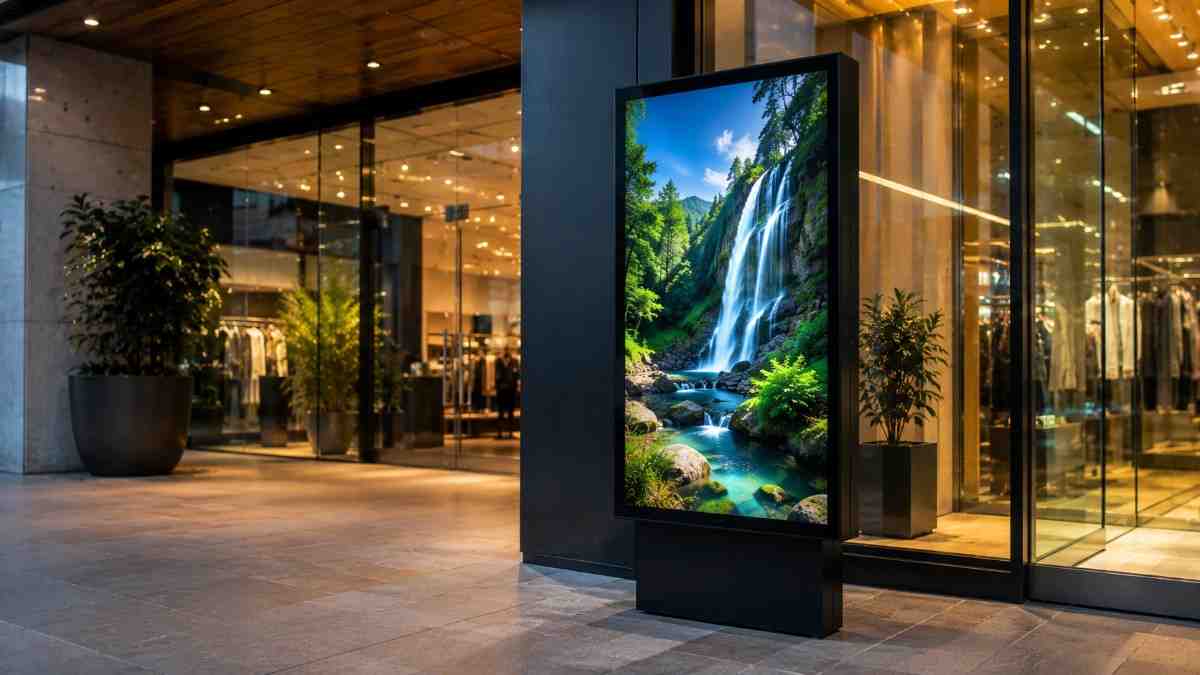
Display digital signage has moved well beyond the flickering screens you used to see in airport departure halls. It is now a mature, accessible technology that businesses of all sizes across New Zealand are using to communicate better, sell more effectively, and create environments that feel genuinely professional. This guide cuts through the noise and gives you the practical knowledge you need to make a confident decision.
What Is Display Digital Signage and Why Does It Matter
At its core, display digital signage is a screen-based communication system. It replaces printed posters, static boards, and traditional signage with digital screens that can show dynamic content including images, video, live data, and scheduled messaging.
The screens themselves range from small countertop displays to large-format wall-mounted panels and outdoor LED installations. What they all share is the ability to show content that can be updated remotely, scheduled in advance, and tailored to specific audiences or times of day.
According to Nielsen research, digital signage reaches more than 135 million people per week in the United States alone, and adoption rates in markets like New Zealand have followed a similar upward trajectory as hardware costs have dropped and content management platforms have become more intuitive.
The reason it matters for your business is simple. People respond to moving images and changing content far more than they respond to static text. A display that rotates through relevant, well-designed messages captures attention. A printed poster that has been on the wall for three months becomes invisible.
How Display Digital Signage Actually Works
Understanding the basic architecture helps you ask better questions when speaking with providers and avoid buying the wrong components.
The Hardware Layer
This is the physical screen itself. For commercial applications, you need commercial-grade displays rather than consumer televisions. Commercial screens are engineered for continuous operation, often running sixteen to twenty-four hours per day. They have better thermal management, higher brightness options, and longer operational lifespans than anything you would buy from a consumer electronics store.
Screen size, brightness, resolution, and orientation (portrait or landscape) are all chosen based on the viewing environment and distance. A screen in a narrow corridor requires different specifications than one mounted above an external entrance facing a busy street.
The Media Player
The media player is the device that stores and plays your content. It connects to the screen and pulls in scheduled content either from local storage or from a cloud-based content management system. Some commercial displays have the media player built in, which simplifies the installation and reduces the number of components to maintain.
The Content Management System
This is where you actually control what your screens show. Cloud-based content management systems let you update content from any device with an internet connection, schedule different content for different times of day or days of the week, and manage multiple screens across multiple locations from a single dashboard.
When I tried managing content on an older locally-hosted system versus a modern cloud platform, the difference in usability was enormous. The cloud system took minutes to update. The older system required on-site access and technical knowledge that most small business owners simply do not have.
Types of Display Digital Signage for Different Business Needs
Not every screen does the same job. Here is how the main categories map to real business applications.
Retail Digital Signage
Retail is where display digital signage consistently demonstrates the fastest return. Screens at the point of purchase, in window displays, and at key decision-making points on the shop floor influence buying behaviour in measurable ways.
A well-placed retail display showing a product demonstration or a time-limited offer can increase sales of that product significantly. The visual context and the sense of immediacy created by dynamic content are things that a shelf label or printed sign simply cannot replicate.
Digital Menu Boards
Hospitality businesses have adopted digital menu boards faster than almost any other sector, and for good reason. Menus change. Daily specials rotate. Seasonal items come and go. Managing all of that through printed materials is slow and expensive.
Digital menu boards solve that problem entirely. They also allow businesses to show food photography that makes menu items genuinely appealing, something printed menus rarely achieve at the same visual quality. Dynamic Displays has delivered digital menu board installations across the hospitality sector in New Zealand, and the feedback from operators consistently highlights how much time is saved on menu management alone.
Corporate and Office Signage
Corporate environments use display digital signage across a wide range of functions. Lobby screens create a strong first impression for visitors. Internal communication screens keep staff informed about company news and performance metrics. Meeting room displays show booking status and room availability in real time.
In my experience, the businesses that get the most from corporate signage are those that treat the screens as genuine communication tools rather than just decorative elements. A lobby screen showing live company achievements, project updates, or customer testimonials does something genuinely useful. A screen showing a static logo does not.
Outdoor Digital Signage Displays
Outdoor display digital signage operates in a different category from indoor screens due to the environmental demands involved. Brightness, weather protection, and thermal management all need to meet higher specifications for reliable outdoor performance.
For high-traffic outdoor locations, digital displays create an impression that no static sign can match. Animated content, video, and rotating messages all perform significantly better than fixed graphics when it comes to capturing the attention of people moving through a busy environment.
Interactive Digital Signage
Interactive displays take the format further by allowing users to engage directly with the screen. Touchscreen wayfinding directories, self-service information kiosks, and interactive product catalogues all fall into this category.
Interactive signage is particularly valuable in retail environments, museums, educational institutions, and any location where visitors need to navigate or access information independently. The engagement levels are substantially higher than passive displays because the user is actively participating rather than passively receiving.
Key Benefits of Display Digital Signage for Business
Here is a consolidated view of the tangible benefits businesses actually experience:
- Reduced printing costs over time as digital content replaces printed materials
- Faster content updates allowing businesses to respond to changes in real time
- Higher customer engagement compared to static signage formats
- Consistent brand presentation across multiple locations managed from one platform
- Scheduling capability so the right message reaches the right audience at the right time
- Remote management meaning updates do not require physical presence at each screen
- Longer operational lifespan of commercial-grade hardware compared to printed alternatives
These are not theoretical benefits. They are the outcomes that businesses using display digital signage report when surveyed about their investment. The cumulative effect over two to three years is typically a significant positive return relative to the cost of traditional printed signage management.
Common Mistakes When Buying Display Digital Signage
I have noticed that the same errors come up repeatedly when businesses make signage decisions without proper guidance. Knowing them in advance saves you real money and frustration.
Choosing consumer screens for commercial use. This is the most costly mistake. Consumer televisions are not designed for the duty cycles, brightness requirements, or thermal conditions of commercial deployments. They fail early, look inadequate in bright environments, and void their warranties when used outside domestic settings.
Underestimating content requirements. The hardware is only half the job. You need a plan for what your screens will actually show, how often content will be updated, and who is responsible for managing it. Screens showing outdated content or placeholder graphics are actively damaging to your brand perception.
Buying on specification alone without assessing the environment. A 65-inch 4K display sounds impressive. But if it is installed in a location with poor sight lines, inadequate mounting infrastructure, or competing light sources, the specification becomes irrelevant. Environment assessment should always come before hardware selection.
Not planning for content management from day one. Many businesses install screens and then discover that updating them is harder than expected because they did not consider the content management workflow during the purchase decision.
Ignoring after-sales support. Display digital signage is a technology investment. Things occasionally need attention. Having a local provider who can respond quickly is worth more than saving a small amount on a product from a supplier with no NZ presence.
How to Evaluate a Display Digital Signage Provider in New Zealand
The provider relationship matters as much as the hardware. Here is what to look for:
- Site assessment capability before any product recommendation is made
- Commercial-grade hardware sourced from reputable manufacturers
- A clear content management solution that your team can actually use
- Local installation expertise with a track record in comparable environments
- Responsive after-sales support from people based in New Zealand
- References or portfolio from businesses in similar industries or locations
Dynamic Displays has built its reputation on this kind of end-to-end service model. With over ten years of experience and more than 200 completed projects across retail, hospitality, corporate, and events sectors in New Zealand, they bring practical knowledge to every project that generic equipment suppliers simply cannot match.
Getting More from Your Display Digital Signage Over Time
The businesses that get the best long-term results from display digital signage are the ones that stay active with their content. Here is a simple framework for maintaining momentum after installation:
Treat your screens like a communication channel, not a one-time installation. Schedule regular content reviews at least monthly. Build a small library of templates for common content types so updates take minutes rather than hours.
Align your screen content with your business calendar. Promotions, events, seasonal offers, and product launches should all be reflected on your displays in a timely way. There is no point having a dynamic display system if the content is three months out of date.
Use the scheduling functionality your content management system provides. A breakfast promotion that runs from 7am to 10am and automatically switches to a lunch offer is far more effective than a single static message running all day.
And invest in good design. The technology is only as effective as the creative quality of what you put on it. Clean, well-designed content with clear messaging and strong visuals makes every screen work harder.
Display digital signage is one of the most versatile and high-impact communication investments a business can make. When it is planned properly, installed correctly, and managed actively, it delivers visible results that compound over time.
If you are ready to explore what display digital signage could do for your business, reach out to the team at Dynamic Displays for a proper site assessment and an honest conversation about what will actually work for your environment and goals.