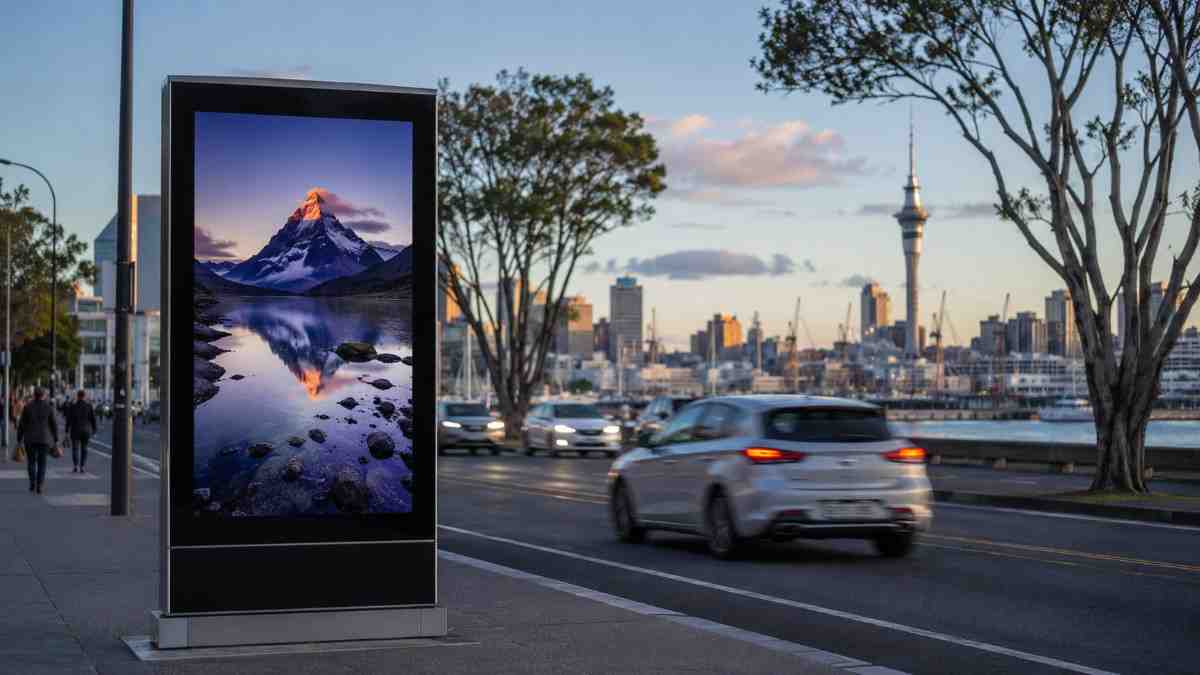
This guide covers everything you genuinely need to know before you buy or install an outdoor digital display. Whether you run a cafe, a retail shop, a gym, or a service business, this will help you make a smart decision rather than an expensive mistake.
What Is Outdoor Digital Signage and Why Does It Matter?
Outdoor digital signage refers to weatherproof electronic display screens placed outside a building or in an open environment to attract, inform, or direct people. These are not the fragile indoor screens you might be thinking of. They are purpose-built to handle rain, wind, sunlight, and temperature swings.
In New Zealand, the weather can shift dramatically within a single day. A display system that cannot handle UV exposure, humidity, or sudden downpours is simply not built for this country. That is why the specification details matter as much as the screen size.
The numbers tell the story clearly. Research from Nielsen found that digital out-of-home advertising generates, on average, a 38 percent higher recall rate compared to static signage. When you factor in the ability to update content remotely and run video, the advantage over a printed sign becomes hard to ignore.
How Outdoor Digital Signage NZ Works in Real Business Settings
In my experience, the businesses that get the most out of outdoor screens are not necessarily the largest ones. A well-placed 43-inch display outside a small Wellington bakery can outperform a poorly placed large billboard if the content is targeted and the screen brightness is right.
Here is a simple way to think about it. Imagine you are walking down a shopping strip on a bright Saturday afternoon. Most printed signs disappear in the glare. But a high-brightness digital screen, running a short looped video of fresh food or a bold promotional message, cuts straight through. That is the power of nit-level brightness, which we will cover shortly.
The key to making outdoor digital signage work for your business comes down to three core factors.
1. Screen placement — Where the screen is positioned relative to foot traffic and sightlines.
2. Content relevance — Whether what is on screen actually means something to the person walking past.
3. Hardware quality — Whether the display can hold up to the outdoor conditions at your specific location.
Get all three right, and your signage becomes a genuine asset. Miss one, and you have an expensive piece of equipment that nobody notices or that breaks down within a season.
What to Look for in Outdoor Digital Signage NZ Suppliers
I've noticed that a lot of business owners focus almost entirely on screen size and forget about the hardware specifications that actually determine performance. Let me walk you through what actually matters.
IP Rating and Weatherproofing
The IP65 rating is the standard benchmark for outdoor screens in New Zealand conditions. IP65 means the unit is fully dust-tight and protected against water jets from any direction. Anything below that is a risk in a country where coastal humidity and sudden rain are a regular reality.
When I tried using a lower-rated screen for an outdoor cafe setup a few years back, it lasted one winter season before the internal components started showing moisture damage. It cost far more to replace than it would have to buy the right unit from the beginning.
Brightness: The Number That Matters Most Outdoors
Indoor screens typically operate at 250 to 400 nits. That is completely inadequate for outdoor use in direct sunlight.
For outdoor digital signage in NZ, you want a minimum of 2500 nits. At that level, content remains clearly visible even on a bright summer day. Some premium units go higher, which is worth considering if your screen will face north and receive direct sun for most of the day.
Dynamic Displays supplies outdoor screens rated at 2500 nits with an IP65 weatherproof enclosure, which is the combination you want for New Zealand's variable climate.
Battery vs Mains Power
Not every outdoor location has easy access to a power outlet. Portable outdoor screens with a built-in battery offering 10 or more hours of runtime are genuinely useful for events, markets, exhibitions, and outdoor activations where running a cable is impractical or unsafe.
The Different Types of Outdoor Digital Signage Available
Understanding the product categories will help you match the right solution to your situation.
Portable Freestanding Outdoor Displays
These are self-contained units, typically on a stand, that you can position wherever foot traffic is highest. They are ideal for:
- Retail businesses wanting to push foot traffic from the street
- Event organizers who need temporary branded signage
- Hospitality venues with outdoor seating or queuing areas
- Real estate agencies showcasing property listings at the street level
The 43-inch portable outdoor screen is one of the most practical formats for New Zealand businesses. It is large enough to be visible from a reasonable distance but compact enough to move between locations or store securely overnight.
Permanently Mounted Outdoor Digital Signage
Wall-mounted or post-mounted displays are suited to businesses with a fixed, high-traffic location and a consistent message to deliver. Think fuel stations, fast food chains, pharmacies, and hotel entrances.
These setups typically tie into a CMS (content management system) that allows you to schedule and update content remotely without physically touching the screen. You can push a new promotion from your phone or laptop while the screen keeps running.
Digital Outdoor Billboards and Large Format Displays
At the larger end, LED billboard-style displays are used by councils, transport hubs, and large commercial landlords. These involve more complex installation and infrastructure but deliver unmatched visibility in high-footfall zones.
Outdoor Digital Signage NZ: Industry Use Cases
The versatility of outdoor digital signage makes it relevant across a wide range of industries. In my experience working with and observing businesses across New Zealand, here are the sectors getting real results.
Retail and Shopping Centres Outdoor screens that display rotating promotions, new arrivals, or daily deals have been shown to increase foot traffic by drawing in people who might otherwise walk past. According to a study published by the Outdoor Advertising Association, digital displays near a store entrance can increase purchase intent by up to 46 percent.
Hospitality and Food Service Cafes, restaurants, and food trucks use outdoor screens to display menus, specials, and wait times. In a busy lunch zone, a screen doing this job well can reduce the time a customer spends deciding and increase throughput.
Healthcare and Clinics Clinics and pharmacies use outdoor screens to promote health campaigns, seasonal flu jabs, and opening hours. It removes the dependency on printed posters that go out of date the moment they are printed.
Corporate and Commercial Buildings Reception areas, building directories, and car park entries all benefit from smart outdoor displays that communicate access information, branding, and tenant directories.
Dynamic Displays has worked across many of these sectors, delivering screen setups that are matched specifically to the client's environment rather than a generic one-size-fits-all solution.
Content Tips for Outdoor Digital Signage That Actually Works
The best hardware in the world will not save you if the content is weak. Here are the principles that actually work for outdoor displays.
- Keep text minimal. A passing pedestrian or driver has about three to five seconds to absorb your message. One clear message per slide is enough.
- Use high contrast visuals. Light text on dark backgrounds or bold colours on white tend to perform well in varying light conditions.
- Loop short videos. A five to ten second looping video clip grabs more attention than a static image.
- Update content regularly. Stale content trains passersby to ignore your screen. Change it weekly at minimum.
- Match content to time of day. A breakfast special running at 7am on a digital screen outside a cafe is far more effective than the same promotion running at 3pm.
Installation and Support: What to Ask Before You Commit
Before you finalise any outdoor digital signage purchase in NZ, ask the supplier these questions directly.
Does the screen come with a local warranty and support? This matters. If something goes wrong with a screen purchased from an overseas supplier with no local presence, you may wait weeks for support.
Who handles installation? Permanent mounting requires appropriate fixings and sometimes electrical work. Make sure the supplier can manage the full installation or work with your preferred tradesperson.
What CMS is included? Some screens come with proprietary software locked to a single provider. Understand what flexibility you have to update content yourself.
Is after-sales maintenance available? Outdoor screens cop a lot of abuse from the environment. Knowing that maintenance and servicing is available locally gives you far better long-term security.
Final Thoughts
Outdoor digital signage in New Zealand is no longer something only large brands with large budgets can access. The hardware has become more reliable, more affordable, and more flexible over the past several years.
If you are serious about growing your visibility, attracting more foot traffic, and communicating with people before they even walk through your door, an outdoor screen is one of the most practical investments you can make in your physical presence.
Start by thinking clearly about your location, your environment, and the message you want people to see. Then find a supplier who understands the NZ climate and can back up the hardware with real local support.
Dynamic Displays specialises in exactly this, helping New Zealand businesses find the right outdoor digital display solution for their specific space, industry, and goals.