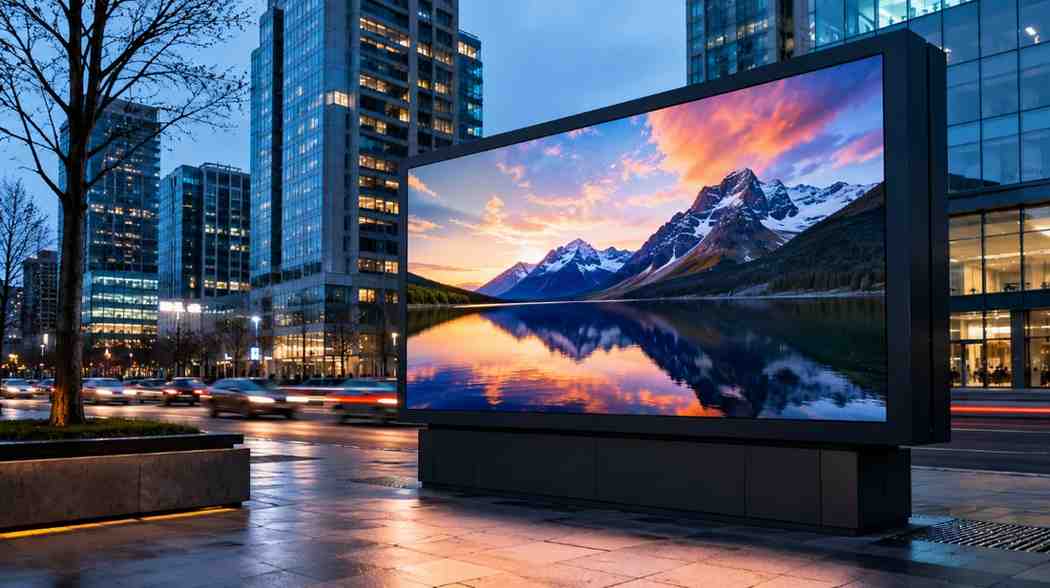
This guide walks you through everything, from how outdoor LED screens actually work to what specs matter, what to ignore, and what real-world installation looks like when it is done properly.
What Makes an Outdoor LED Display Screen Different?
It is a fair question. After all, a screen is a screen, right?
Not quite. Indoor and outdoor displays are fundamentally different in three key areas: brightness, protection, and durability.
An indoor LCD panel typically outputs somewhere between 300 and 500 nits of brightness. That is plenty for a dimly lit corridor or a brightly lit showroom. But step outside on a sunny New Zealand afternoon and that same screen becomes nearly invisible. You need at minimum 2500 nits for outdoor use, and ideally more for locations with direct sun exposure from the west or north.
Protection is the other big one. Rain, dust, humidity, salt air near the coast, and temperature swings between seasons, your screen needs to handle all of it without flinching. That is why outdoor LED display screens are built to a completely different standard than their indoor counterparts.
In my experience, businesses that skip the research phase and grab the cheapest available option end up spending more fixing the problem than they would have spent buying the right screen in the first place.
Understanding IP Ratings for Outdoor Screens
You will see IP65 mentioned a lot when shopping for outdoor display screens. IP stands for Ingress Protection, and the two numbers tell you how well the unit resists solids and liquids.
The first digit (6) means the screen is completely dust-tight. Nothing gets in. The second digit (5) means it can handle water jets from any direction without damage. For most outdoor environments in New Zealand, IP65 is the minimum you should accept.
If your screen is near the coast or in a marine environment, look for IP66 or higher, which offers even stronger water resistance.
Dynamic Displays' 43" Smart Outdoor Portable Screen meets the IP65 standard and is built specifically for the variable outdoor conditions you get across New Zealand, from Wellington's notorious winds to the humidity of Auckland summers.
Key Specs That Actually Matter
There is a lot of noise in the outdoor signage market. Manufacturers throw numbers around that sound impressive but do not always translate into real-world performance. Here is what genuinely matters.
Brightness
As mentioned, 2500 nits is your baseline for outdoor use. For screens facing north or west in direct sunlight, pushing toward 3000 to 5000 nits gives you consistent visibility throughout the day. Dimmer screens in full sun look like a grey rectangle. Nobody reads a grey rectangle.
Screen Size and Viewing Distance
Bigger is not always better. It depends entirely on how far away your audience is when they see the screen. A 43-inch outdoor screen is excellent for pedestrian zones, storefronts, events, and exhibition spaces where people are within 3 to 6 metres. For larger footprints like car parks, forecourts, or roadside advertising, you will want to scale up.
Refresh Rate
This matters more than most people realise, especially if your content involves video. A refresh rate of 1920Hz or higher ensures smooth playback and prevents flickering when screens are photographed or filmed. Events and brand activations where your screen might end up in photos or video coverage need this.
Panel Type
Most quality outdoor screens use IPS panels, which offer wide viewing angles so your content is visible even when someone is not standing directly in front of it. In high-footfall outdoor settings, viewing angle is critical.
Battery and Power
Portable outdoor signage adds another layer of flexibility. The Dynamic Displays outdoor screen runs for up to 10 hours on battery, which covers a full business day, a market day, or a multi-session event without needing a power outlet nearby. A charge indicator means you know exactly where you stand without guessing.
Types of Outdoor LED Display Screens
The category is broader than most people realise. Here is a breakdown of the main types and where each one works best.
Portable Outdoor Signage
Freestanding, lightweight, and battery-powered. These are the workhorses of events, pop-up retail, exhibitions, and any situation where you need flexibility. Roll it to a new spot, switch on, done. No permanent installation, no electrician required.
If your business moves around or you need signage for different locations throughout the week, portable outdoor LED screens are the obvious answer.
Window-Facing High Brightness Displays
These sit inside a shopfront window but are engineered to be visible from the street. They combine indoor build quality with outdoor-level brightness. A smart option for retailers who want outdoor visibility without weatherproofing requirements.
Permanent Outdoor Mounted Screens
Wall-mounted or pole-mounted displays designed for fixed locations. Shopping centres, transport hubs, stadiums, petrol stations, and corporate campuses all use these. They require professional installation and hardwired power but deliver the most reliable long-term performance.
Outdoor Digital Billboards and LED Panels
Large format LED panels made up of pixel modules, typically used for roadside advertising, building facades, and large venue signage. These are custom-built to size and represent the upper end of the outdoor display market.
Top Features to Look For in 2026
The outdoor LED display screen market has moved quickly. Features that were optional extras two years ago are now standard expectations on quality units. Here is what modern outdoor screens should offer.
- Mobile App Control so you can update content remotely without being on site
- GPS Anti-Theft tracking as an optional layer of protection for portable units
- Hidden Interfaces that keep control ports concealed for a cleaner look and better tamper resistance
- Front Stereo Speakers for content that needs audio, event announcements, video ads, or brand activations
- Touch Functionality for interactive outdoor experiences like wayfinding, product exploration, or event engagement
- Multi-Color Design Options so the hardware itself complements your brand aesthetic rather than clashing with it
- Secure Locking Bar to deter theft in high-footfall or unsupervised environments
I have noticed that businesses in the events and hospitality space particularly value the audio and touch options, while retail and food operators tend to prioritise content flexibility and remote management above everything else.
Outdoor LED Screens Across Different Industries
Retail and Food and Beverage Outdoor LED display screens placed at the entrance of a café, restaurant, or retail store do something a printed A-frame simply cannot. They move. They update. They can show a daily special at 7am and a dinner promotion by 4pm without anyone touching the physical screen.
Events and Exhibitions This is where portable outdoor screens shine hardest. A well-placed outdoor display at an event booth creates an immediate point of difference. In my experience, exhibitors using digital screens consistently attract more foot traffic than those relying on printed banners, even when the underlying content is similar.
Corporate and Commercial Campuses Visitor directions, building identification, event announcements, and safety information all benefit from permanent outdoor display installations in commercial settings.
Real Estate Property developers and agencies are increasingly using outdoor screens at development sites and on-site offices to showcase renders, floor plans, and availability in a way that actually engages buyers rather than handing them a brochure.
Transport and Public Infrastructure Bus terminals, ferry terminals, and car parks use outdoor LED screens for real-time schedule updates, wayfinding, and advertising. The combination of brightness, durability, and remote content management makes them ideal for high-traffic public environments.
Installation: What to Think About Before You Commit
Getting the screen right is half the job. Getting the installation right is the other half.
Location and Mounting Will the screen be wall-mounted, pole-mounted, or freestanding? Each requires different structural considerations. A wall mount needs to handle the weight of the screen plus wind load. A pole mount in a high-wind area like Wellington needs engineering sign-off.
Power Access Permanent screens need a dedicated power supply. Think about cable routing, weatherproof conduit, and whether you need an electrician to sign off on the installation.
Content Management Setup How will content get to the screen? Via USB, Wi-Fi, LAN, or mobile app? Set this up properly from day one and you will thank yourself every time you need to update a promotion or change a message.
Ongoing Maintenance Outdoor screens face wear that indoor screens simply do not. Build a maintenance plan into your thinking from the start. Cleaning the panel, checking seals, inspecting mounts, and verifying software is all part of keeping a screen performing at its best.
Dynamic Displays handles the full installation process from site assessment through to content system setup, which takes a lot of the guesswork out of it for New Zealand businesses.
Common Mistakes Businesses Make With Outdoor Screens
Buying indoor screens for outdoor use. It happens more often than you would think, and it never ends well.
Underestimating brightness requirements. A 1000-nit screen outside on a sunny day is effectively invisible.
Ignoring cable and power planning. Screens installed without proper weatherproof cable management develop faults faster and create safety risks.
Neglecting content after installation. An outdoor screen running a six-month-old promotion is worse than no screen at all. It signals to customers that no one is paying attention.
Choosing size over suitability. A massive screen in a pedestrian lane with 2-metre viewing distances is overkill and looks out of place. Match the screen to the environment.
Conclusion
An outdoor LED display screen is one of the highest-visibility investments a business can make. Get the spec right, install it properly, keep the content fresh, and it works hard for you every single day without complaint.
The key decisions, brightness, IP rating, mounting type, content management, and portability, are all worth thinking through carefully before you commit. Rushing into a purchase based on screen size or appearance alone is how businesses end up with hardware that underperforms or fails early.
If you are based in New Zealand and want guidance on which outdoor screen fits your space and goals, Dynamic Displays offers experienced advice and hands-on installation support. Reach out and have a proper conversation before you decide.