A customer notices your storefront before they interact with your staff. A visitor follows your directional signs before asking for help. A shopper often decides whether to enter a store based on how professional and visible the branding looks from the outside.
That is the power of effective signage systems.
Modern businesses are no longer relying only on static signs. Today’s brands use a mix of digital displays, LED screens, menu boards, wayfinding solutions, and interactive systems to create stronger customer experiences and improve visibility.
Choosing the right signage systems for your brand is not just about aesthetics. It directly impacts customer engagement, foot traffic, brand recognition, and sales performance.
Whether you operate a retail store, restaurant, office, healthcare facility, educational institution, or corporate showroom, the right signage solution helps your business communicate clearly and stand out in a competitive market.
In this guide, we will break down everything you need to know before investing in signage systems, including types, features, industry-specific recommendations, mistakes to avoid, and expert tips to help your business make the right decision.
What Are Signage Systems?
Signage systems are visual communication tools designed to inform, guide, promote, or influence customers. These systems can include both static and digital displays used across indoor and outdoor environments.
A complete signage system may include:
- Digital menu boards
- LED display screens
- Reception displays
- Outdoor advertising screens
- Interactive kiosks
- Wayfinding signage
- Retail promotional displays
- Video walls
- Corporate branding displays
The goal is simple. Deliver information quickly while strengthening your brand identity.
Businesses today increasingly prefer digital signage systems because they allow real-time content updates, dynamic visuals, and greater audience engagement.
Why Choosing the Right Signage System Matters
Many businesses underestimate the long-term impact of signage. Poor signage can confuse customers, weaken branding, and reduce visibility.
The right system helps your brand:
Build Stronger Brand Recognition
Consistent visuals, colours, and messaging improve customer recall and trust.
Improve Customer Experience
Clear navigation and information reduce frustration and improve satisfaction.
Increase Engagement
Dynamic digital content captures attention significantly better than static signs.
Support Marketing Campaigns
Promotions, announcements, and seasonal campaigns can be updated instantly on digital displays.
Improve Operational Efficiency
Digital signage reduces printing needs and simplifies communication across locations.
Start With Your Brand Goals
Before comparing technologies or display sizes, define what you want your signage systems to achieve.
Ask yourself:
- Do you want more foot traffic?
- Are you trying to improve brand visibility?
- Do customers need better navigation?
- Will the signage promote products or services?
- Is the goal customer engagement or information delivery?
Your objectives will influence the type of signage system your business needs.
For example:
| Business Goal | Recommended Signage Type |
|---|---|
| Retail promotions | Digital display screens |
| Restaurant menus | Digital menu boards |
| Corporate branding | Reception video walls |
| Navigation assistance | Wayfinding signage |
| Outdoor advertising | LED signage systems |
| Interactive customer experience | Touchscreen kiosks |
Understand the Main Types of Signage Systems
Digital Signage Systems
Digital signage uses electronic screens to display videos, graphics, menus, announcements, and advertisements.
Best for:
- Retail stores
- Restaurants
- Corporate offices
- Shopping centres
- Healthcare facilities
Benefits:
- Easy content updates
- High engagement
- Dynamic visuals
- Centralized management
LED Signage Displays
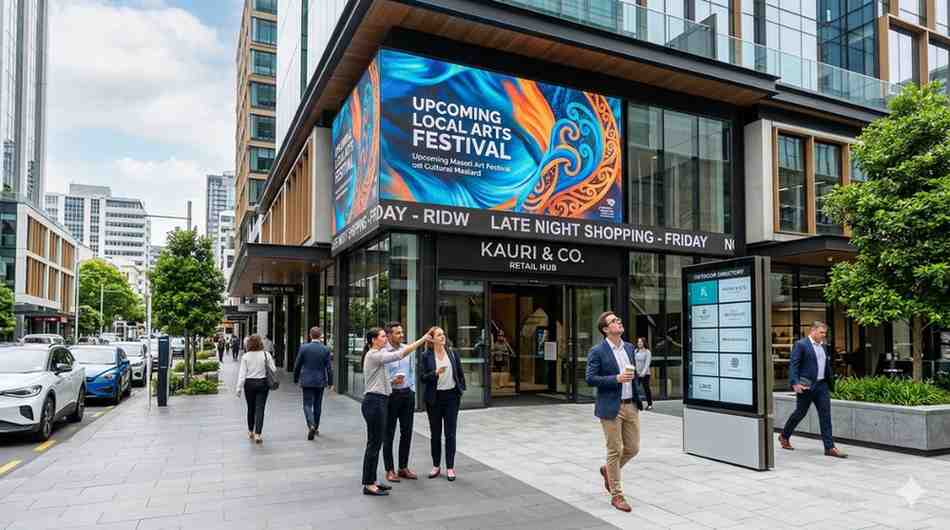
LED displays are bright, durable, and highly visible, especially outdoors.
Ideal for:
- Outdoor advertising
- Stadiums
- Public spaces
- Event venues
Advantages:
- Excellent brightness
- Long lifespan
- Weather resistance
- Large format visibility
LCD Signage Displays
LCD screens offer sharp image quality for indoor environments.
Common uses:
- Retail advertising
- Corporate presentations
- Reception areas
- Educational institutions
Interactive Signage Systems
Interactive displays allow customers to engage directly with content.
Examples include:
- Touchscreen kiosks
- Self-service stations
- Interactive directories
These systems improve customer convenience and create memorable experiences.
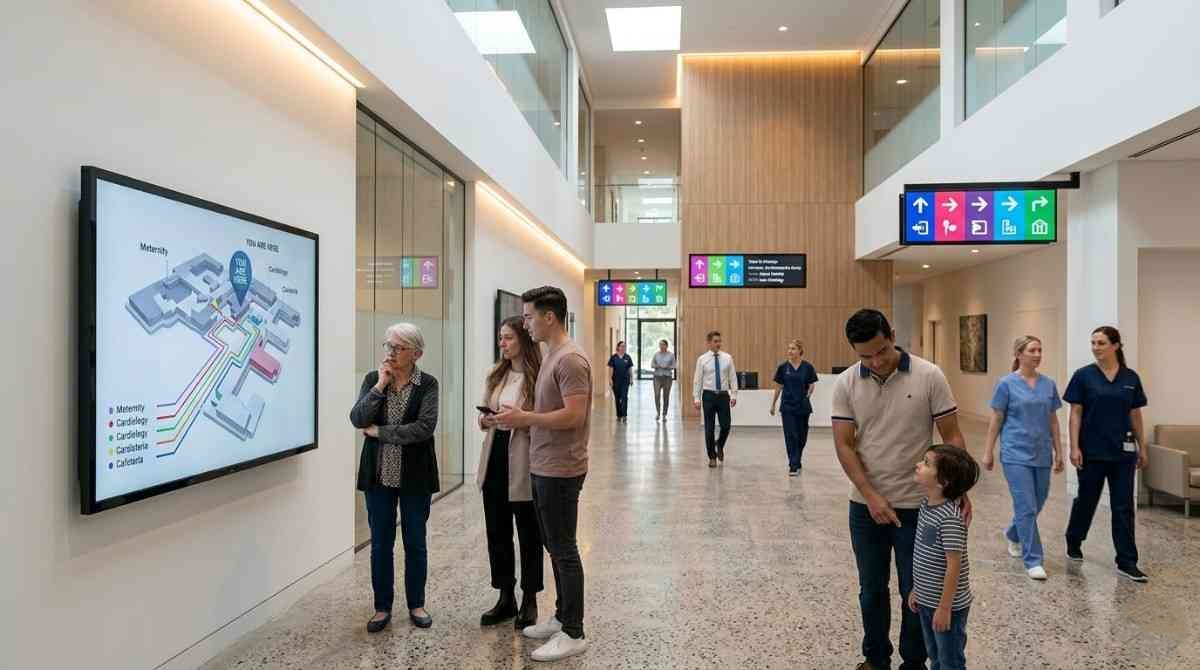
Wayfinding Signage
Wayfinding systems help visitors navigate large spaces efficiently.
Common locations:
- Hospitals
- Airports
- Universities
- Office complexes
- Shopping malls
Indoor vs Outdoor Signage Systems
One of the most important decisions is whether your signage will be installed indoors or outdoors.
Indoor Signage Features
Indoor displays typically focus on:
- High-resolution visuals
- Elegant aesthetics
- Interactive capabilities
- Controlled lighting conditions
Common indoor applications include:
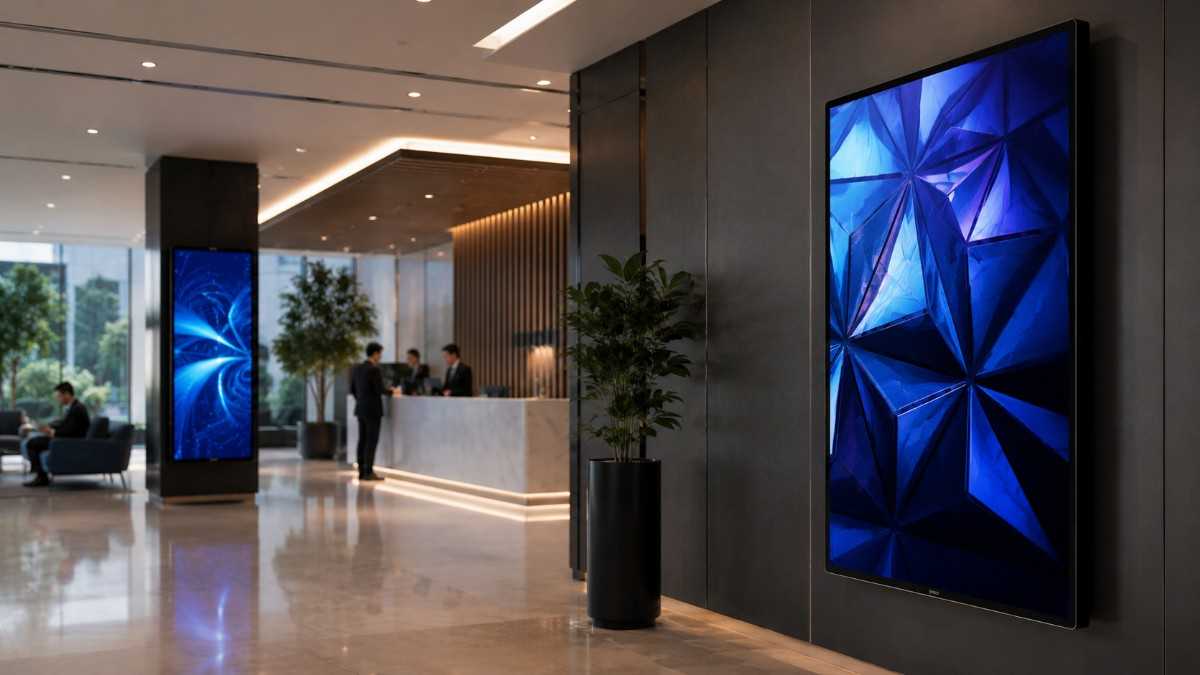
- Reception displays
- Retail promotions
- Menu boards
- Information screens
Outdoor Signage Features
Outdoor signage requires:
- Weatherproof construction
- High brightness
- Durable materials
- UV resistance
Outdoor systems are designed to remain visible in sunlight and withstand environmental conditions.
Key Features to Look For Before Buying
Display Quality
Sharp visuals improve readability and professionalism.
Look for:
- Full HD or 4K resolution
- High brightness levels
- Wide viewing angles
- Colour accuracy
Content Management System
A reliable CMS allows businesses to update content remotely and efficiently.
Essential features include:
- Cloud-based control
- Scheduling capabilities
- Multi-screen management
- Real-time updates
Scalability
Choose signage systems that can grow with your business.
Scalable systems make it easier to:
- Add more displays
- Expand locations
- Integrate new technologies
Durability
Commercial-grade displays are designed for long operating hours and continuous performance.
Energy Efficiency
Energy-efficient displays reduce operating costs and environmental impact.
Industry-Specific Signage Recommendations
Different industries require different signage strategies.
Retail Businesses
Retail environments benefit from:
- Promotional displays
- Window signage
- Interactive catalogues
- Digital product showcases
Digital signage can influence purchasing decisions by displaying dynamic promotions and product videos.
Restaurants and Cafes
Restaurants commonly use:
- Digital menu boards
- Queue management displays
- Promotional screens
Benefits include:
- Easier menu updates
- Better customer engagement
- Improved ordering experience
Corporate Offices
Corporate environments use signage for:
- Branding
- Visitor information
- Meeting room displays
- Internal communications
Professional digital signage creates a modern and organized workplace image.
Healthcare Facilities
Hospitals and clinics rely on:
- Wayfinding systems
- Patient information screens
- Queue displays
Clear signage improves patient experiences and operational efficiency.
Educational Institutions
Schools and universities often use:
- Campus navigation systems
- Event announcements
- Emergency communication displays
Common Mistakes Businesses Make
Choosing signage systems without proper planning can lead to poor results.
Prioritizing Price Over Quality
Low-quality displays may fail early or deliver poor visibility.
Ignoring Viewing Distance
A screen that is too small becomes ineffective in larger spaces.
Poor Placement
Even premium signage loses impact if installed in low-visibility areas.
Overloading Content
Too much information reduces readability and engagement.
Choosing Non-Scalable Systems
Businesses often outgrow outdated signage infrastructure quickly.
Smart Questions to Ask Before Choosing a Signage Provider
Not all signage providers offer the same level of expertise.
Ask these questions:
- Do they provide installation support?
- Can the system be customized?
- Is remote content management available?
- What maintenance support is offered?
- Is the hardware commercial-grade?
- Can the system integrate with future technologies?
Working with an experienced provider helps ensure long-term performance and reliability.
The Role of Content in Successful Signage Systems
Even the best display hardware will fail without effective content.
Your signage content should:
- Be visually clean
- Use readable typography
- Include high-quality visuals
- Deliver concise messaging
- Maintain brand consistency
For digital signage, motion graphics and short videos often perform better than static visuals.
A good rule is the "5-second readability test." Customers should understand the core message within five seconds.
Emerging Trends in Signage Systems
Technology continues to transform visual communication.
AI-Driven Content Personalization
Modern systems can adjust content based on:
- Audience demographics
- Time of day
- Customer behaviour
Interactive Experiences
Touch-enabled displays are becoming more common across retail and hospitality industries.
Cloud-Based Management
Businesses increasingly manage multiple screens remotely through centralized platforms.
Sustainability Focus
Energy-efficient displays and recyclable materials are becoming more important for environmentally conscious brands.
Data Integration
Advanced signage systems now integrate with analytics platforms to measure engagement and performance.
How Signage Systems Support Long-Term Brand Growth
Effective signage does more than display information. It creates consistent brand experiences.
Strong signage systems help businesses:
- Stay visually competitive
- Improve customer trust
- Increase marketing flexibility
- Strengthen communication
- Create memorable experiences
When strategically implemented, signage becomes a long-term branding asset rather than a simple display tool.
Expert Checklist Before Finalizing Your Signage System
Before making a final decision, review this checklist:
Define Your Goals
Know exactly what the signage should achieve.
Evaluate Your Environment
Indoor and outdoor conditions require different solutions.
Understand Your Audience
Your signage should match customer expectations and behaviour.
Plan Future Expansion
Choose systems that can scale with your business.
Focus on Content Strategy
High-quality visuals and messaging are essential.
Work With Experienced Professionals
Professional guidance reduces costly mistakes.
Why Businesses Choose Professional Signage Partners
Experienced signage specialists understand:
- Display technologies
- Installation requirements
- Visibility optimization
- Content workflows
- Industry-specific challenges
A professional provider can recommend customized solutions based on your location, audience, and branding goals.
For businesses in New Zealand looking for advanced digital signage and display solutions, Dynamic Displays offers modern signage systems designed for commercial environments across multiple industries.
Final Thoughts
Choosing the right signage systems for your brand is a strategic business decision that affects visibility, customer experience, and long-term growth.
The best signage solutions combine technology, branding, functionality, and content strategy to create impactful customer interactions. Whether you need digital displays, LED screens, menu boards, or interactive systems, investing in the right setup can significantly improve how customers perceive and engage with your business.
If you are planning to upgrade your business signage, professional guidance can help you choose a solution tailored to your goals and environment.
To explore advanced digital signage solutions for your business, contact Dynamic Displays at +64 21 281 5009.