Picture this. A potential customer walks past your business. They glance toward your storefront. In roughly three seconds, they decide whether to walk in or keep moving. That decision happens before they read a single word of your marketing material, check your website, or speak to any member of your team.
That three-second window is where signage systems either earn their place or fail completely.
Businesses that invest in advanced signage systems understand something fundamental: visibility is not optional. Communication is not optional. And in a commercial landscape where attention is the scarcest resource on the planet, the way your business presents itself in physical space matters more than most owners realise.
This article breaks down exactly why modern signage systems have become a non-negotiable asset for businesses across New Zealand, what makes them genuinely effective, and how to think about choosing the right solution for your specific situation.
The Silent Sales Force Most Businesses Are Ignoring
There is a reason retail strategists talk about the "silent salesperson." A well-designed, well-placed signage system communicates your brand, your offer, and your personality to every single person who passes by, enters your space, or waits in your queue, without requiring a single staff member to say a word.
Research from FedEx Office found that 76% of consumers entered a store they had never visited before based on its signage alone. That is not a marginal influence. That is a primary driver of foot traffic and first impressions.
I have noticed that businesses which treat signage as an afterthought, something to sort out after the fit-out is done and the budget is mostly spent, consistently underperform on visibility compared to those that plan their signage systems early and invest in them properly.
The shift from static printed signage to dynamic digital systems has changed what is possible. Content can now change in real time. Promotions can run for specific hours. Different messages can reach different audiences at different times of day. The old printed sign could not do any of that.
What Advanced Signage Systems Actually Look Like in 2026
The term "signage system" covers a broad range. Understanding the landscape helps you make smarter decisions about what your business actually needs.
Digital Signage Systems
The backbone of modern commercial communication. Digital signage systems use LCD, LED, or OLED screens to display dynamic content including video, animation, images, live data feeds, and scheduled playlists. They are connected to a content management system that allows updates from anywhere, instantly.
These are used everywhere from fast-food menu boards to corporate reception areas, from retail promotional displays to hospital waiting rooms.
Outdoor Signage Systems
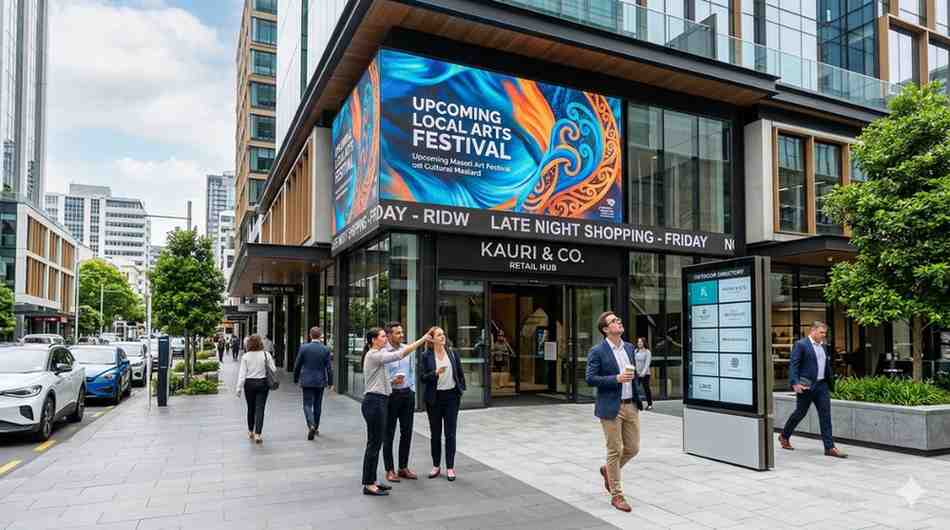
Built to operate in open-air environments with high-brightness panels, weatherproof enclosures, and structural mounting solutions. Outdoor signage systems are engineered differently from indoor units, with specifications that account for direct sunlight, rain, wind, and temperature variation.
For any business with a physical street presence, outdoor signage is often the highest-impact point in the entire customer journey.
Indoor Signage Systems
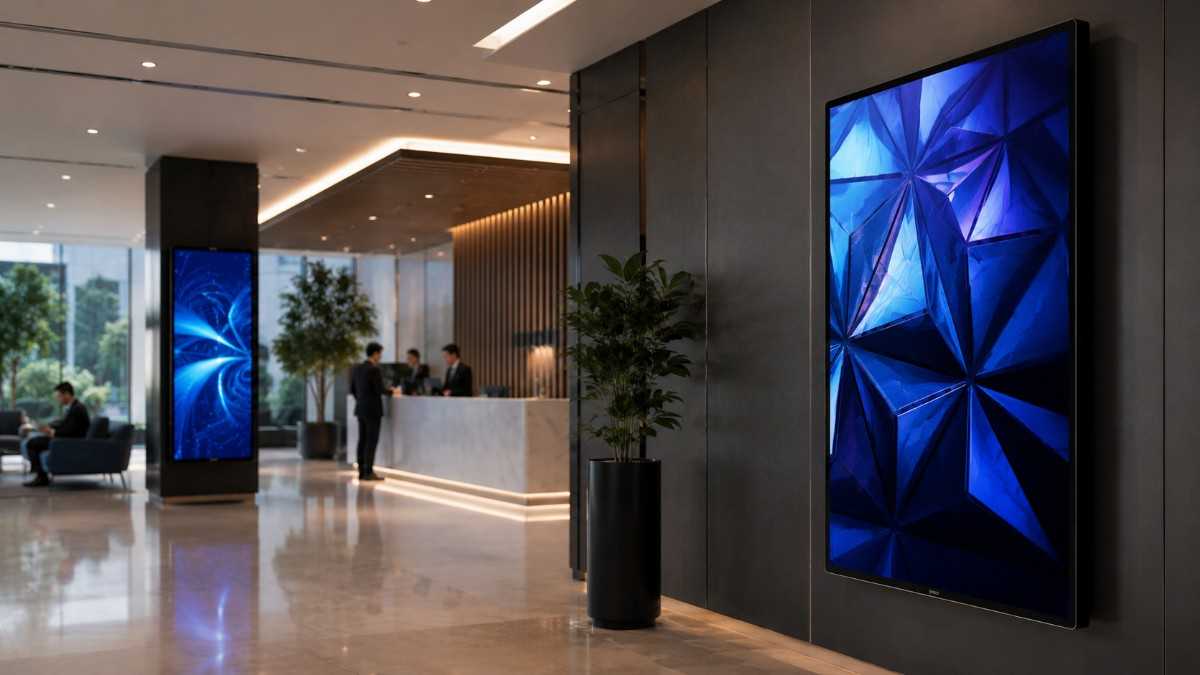
Covering everything from wall-mounted displays in corporate lobbies to double-sided screens in shopping centres and digital menu boards in food service environments. Indoor systems prioritise resolution, viewing angle, and aesthetic integration with the surrounding space.
Meeting Room and Corporate Signage Systems
A growing category that covers room booking displays, internal communication screens, visitor management panels, and wayfinding systems. For corporate offices and multi-tenant buildings, these systems streamline operations and create a professional environment that clients and staff both benefit from.
Custom and Integrated Signage Systems
Bespoke solutions built to specific size, shape, content, and technical requirements. When a standard off-the-shelf display does not suit the space, custom integration delivers something that does.
Five Business Problems That Advanced Signage Systems Solve Directly
This is where theory meets practice. Rather than speaking in abstractions about "brand visibility," it is worth being specific about the real operational problems that well-implemented signage systems fix.
1. Inconsistent Brand Presentation When different locations run different printed materials on different schedules, brand consistency falls apart. A centralised digital signage system pushes approved content to every screen in every location simultaneously. Your brand looks the same whether a customer visits your Auckland store or your Wellington branch.
2. Slow Response to Market Changes Printed signage locks you into fixed messaging. If a product sells out, a promotion ends, or a price needs updating, printed materials require physical replacement. Digital signage systems update in minutes from a phone or laptop, allowing real-time response to inventory changes, competitive moves, or seasonal shifts.
3. High Ongoing Print and Design Costs The cost of regularly designing, printing, and installing new promotional materials adds up faster than most businesses track. A digital signage system absorbs those recurring costs into a one-time infrastructure investment that pays for itself over time.
4. Poor Customer Experience in Waiting Areas Waiting feels longer when there is nothing engaging to look at. Digital signage systems in waiting areas, whether a medical clinic, a service centre, or a bank, reduce perceived wait times and give businesses an opportunity to educate, entertain, and cross-promote during that idle time.
5. Missed Upsell Opportunities A well-timed promotion on a screen near the point of decision, a food pairing suggestion beside a menu item, a complementary product displayed at checkout, can measurably increase average transaction value. Static signage cannot adapt to these moments. A dynamic signage system can.
How Signage Systems Build Brand Authority Over Time
Here is something that does not get discussed enough. Signage systems are not just about the immediate moment of impact. They build cumulative brand authority over time.
Every time a customer sees your screens delivering sharp, current, professional content, their confidence in your business goes up a notch. Every time they see well-lit, properly maintained, visually compelling displays, their perception of your quality and reliability improves.
In my experience working through how businesses think about their visual presence, the ones that invest in quality signage systems consistently enjoy stronger word-of-mouth, higher customer retention, and better first impressions with new clients than those running on outdated or poorly maintained displays.
There is a psychological component here too. Clean, professional signage signals that a business is doing well. It signals investment, attention to detail, and confidence. Customers pick up on that signal even when they are not consciously aware of it.
Dynamic Displays has seen this pattern consistently across New Zealand clients, where upgrading from static to dynamic signage systems delivers not just marketing benefits but a tangible improvement in how staff, customers, and partners perceive the business overall.
Choosing the Right Signage System: A Practical Framework
Not every business needs the same solution. Here is a structured way to think through what actually fits your situation.
Step 1: Define Your Primary Communication Goal
Are you trying to drive foot traffic from outside? Improve customer experience inside? Communicate with staff? Manage queues? Promote specific products? Your primary goal determines which type of signage system belongs at the centre of your investment.
Step 2: Map Your Locations and Audience Flow
Where do people walk, stand, and wait in your space? Where do they make decisions? A signage system placed where nobody naturally looks is wasted investment. Map the physical journey your customers take and identify the highest-impact placement points.
Step 3: Assess Your Content Needs
How often will content change? Who will manage it? Does it need to be different at different times of day? Do multiple locations need the same or different content? The answers shape whether you need a basic standalone player or a networked multi-screen content management platform.
Step 4: Match Technical Specifications to the Environment
Indoor or outdoor? What is the ambient brightness level? What is the viewing distance? What mounting options are available? These physical realities determine the right screen specification before any aesthetic choices are made.
Step 5: Plan for Scalability
The best signage systems grow with your business. A solution that works for one screen today should be able to expand to ten screens across three locations tomorrow without requiring a complete infrastructure rebuild.
Industries Leading the Way With Signage Systems in NZ
Digital signage adoption has accelerated across virtually every sector in New Zealand, but some industries have moved faster than others and offer useful examples of what is possible.
Retail New Zealand retailers use signage systems to drive in-store promotions, manage seasonal campaigns, highlight loyalty programmes, and create immersive brand environments. The ability to sync in-store screens with broader marketing campaigns in real time is a capability that has fundamentally changed retail operations.
Food and Hospitality From coffee carts to full-service restaurants, digital menu boards have become standard. They reduce menu update costs, improve order accuracy by displaying clear visuals, and enable dynamic pricing and promotion scheduling across dayparts.
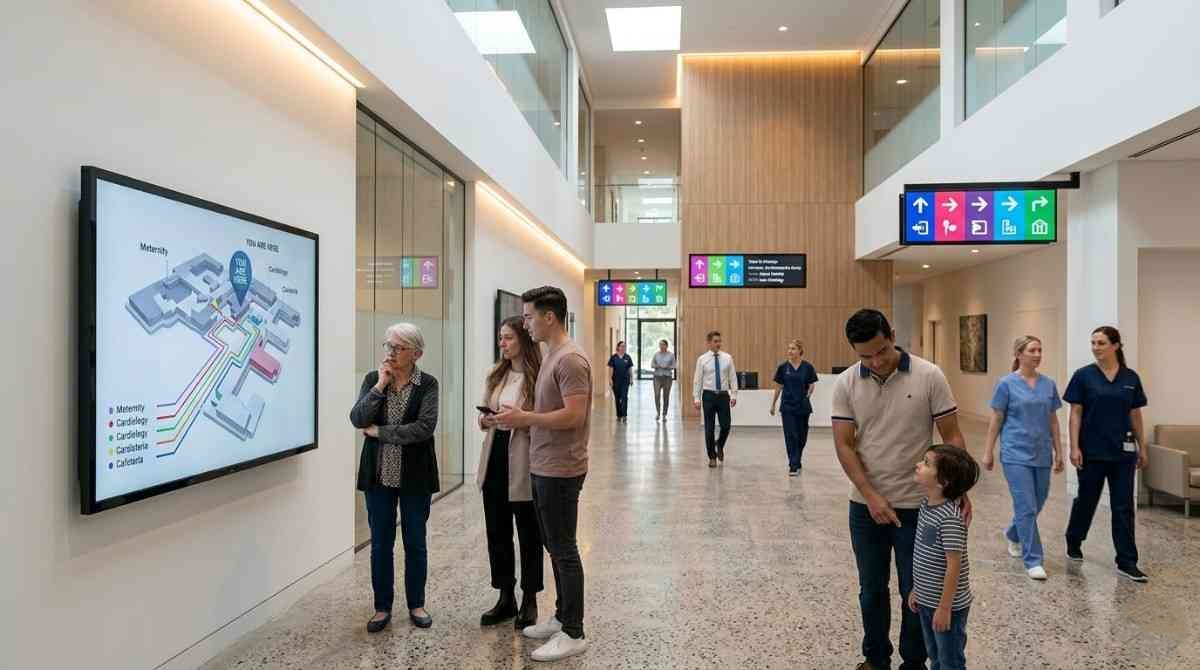
Healthcare Clinics, hospitals, and specialist practices use signage systems for patient wayfinding, appointment reminders, health education content, and waiting room engagement. Reduced perceived wait times and clearer navigation improve patient satisfaction measurably.
Corporate and Professional Services Law firms, accountancies, and financial services businesses use lobby and meeting room signage systems to project professionalism, manage visitor flow, and communicate corporate values to clients and staff alike.
Education Universities and schools deploy campus-wide signage networks for event promotion, emergency communication, wayfinding, and student engagement. A central content management system allows administrators to push messages across an entire campus in seconds.
Common Mistakes Businesses Make When Implementing Signage Systems
Even with the right hardware, signage systems underperform when implementation is handled poorly. These are the most common missteps worth avoiding.
Treating signage as a one-time purchase rather than an ongoing system The hardware is the foundation. The content strategy, the update schedule, and the maintenance plan are what make it work over time. Businesses that install screens and then forget about them see diminishing returns within months.
Choosing screens based on appearance rather than specification A screen that looks great in a showroom might be completely wrong for a bright retail environment or an outdoor location. Brightness, viewing angle, and IP rating are the specs that determine real-world performance.
Neglecting content quality Low-resolution images, poorly designed layouts, and overcrowded screens undermine the investment. The hardware delivers the canvas. The content delivers the message. Both need to be right.
Ignoring cable management and installation quality Visible cables, poorly mounted screens, and improvised installations look amateur. The installation is part of the brand experience. It needs the same attention as the content.
Not planning for software updates and remote management Modern signage systems run on software. That software needs to be kept current. Businesses that skip this end up with screens running outdated firmware that introduces reliability issues and security vulnerabilities.
What to Expect From a Quality Signage System Partner
Working with the right supplier makes a material difference to the outcome. Here is what a genuinely capable signage systems partner should deliver.
A thorough site assessment before recommending any hardware. Honest advice about what specifications you actually need rather than the highest-margin option. Professional installation that accounts for structural requirements, cable management, and power supply. A content management system that your team can realistically operate without specialist IT knowledge. Ongoing support and maintenance access so problems get resolved quickly when they arise.
Dynamic Displays brings all of this to New Zealand businesses, combining hardware expertise with installation experience and genuine post-installation support. The goal is not just to sell a screen. It is to deliver a signage system that keeps performing.
Conclusion: The Business Case for Signage Systems Is Clearer Than Ever
Every touchpoint a customer has with your business shapes their perception of it. The moment they see your building, your lobby, your menu, your queue, they are forming judgments. Signage systems are the infrastructure that controls how your business looks and communicates at every one of those physical touchpoints.
The businesses that understand this invest accordingly. They do not treat signage as a cosmetic expense. They treat it as a communication asset, something that works every hour the doors are open, reaching every person who walks through or past, without requiring additional staff or recurring print spend.
The technology available in 2026 makes this more accessible than it has ever been. Screens are brighter, more durable, and more connected. Content management platforms are simpler to operate. Installation expertise is available to take the complexity out of the process.
The question is not really whether your business needs a modern signage system. The question is how much longer you can afford to communicate with your customers using tools that were designed for a different era.
To explore what the right signage system looks like for your business, contact Dynamic Displays today on +64 21 281 5009 and get a conversation started with a team that knows what works in the New Zealand market.